
The 3-View Confidence Booster
The Problem with "Just Keep Scanning"
Most clinicians think improving at POCUS means scanning more.
More shifts. More patients. More views.
But here's what actually happens:
You scan a cardiac exam Monday. By Friday, when you scan again, you've lost the thread. The probe position feels unfamiliar. The windows don't quite make sense.
You're not building on what you learned — you're starting over.
What Your Brain Actually Needs
Your brain doesn't learn through accumulation.
It learns through retrieval.
When you practice the same exam across multiple days — even briefly — you force your brain to pull that information back into working memory.
That act of retrieval is what strengthens the neural pathway.
This isn't motivational talk. It's neuroscience.
Research going back to Hermann Ebbinghaus in the 1880s — and refined by modern cognitive scientists like those behind the book Make It Stick — shows that spaced repetition beats massed practice every time.
Cramming feels productive. But distributed practice is what builds lasting competence.
The 3-View Confidence Booster
Here's a simple weekly structure that takes advantage of how your brain actually works:
Pick three core views of your anchor exam.
Not the full protocol. Just three views.
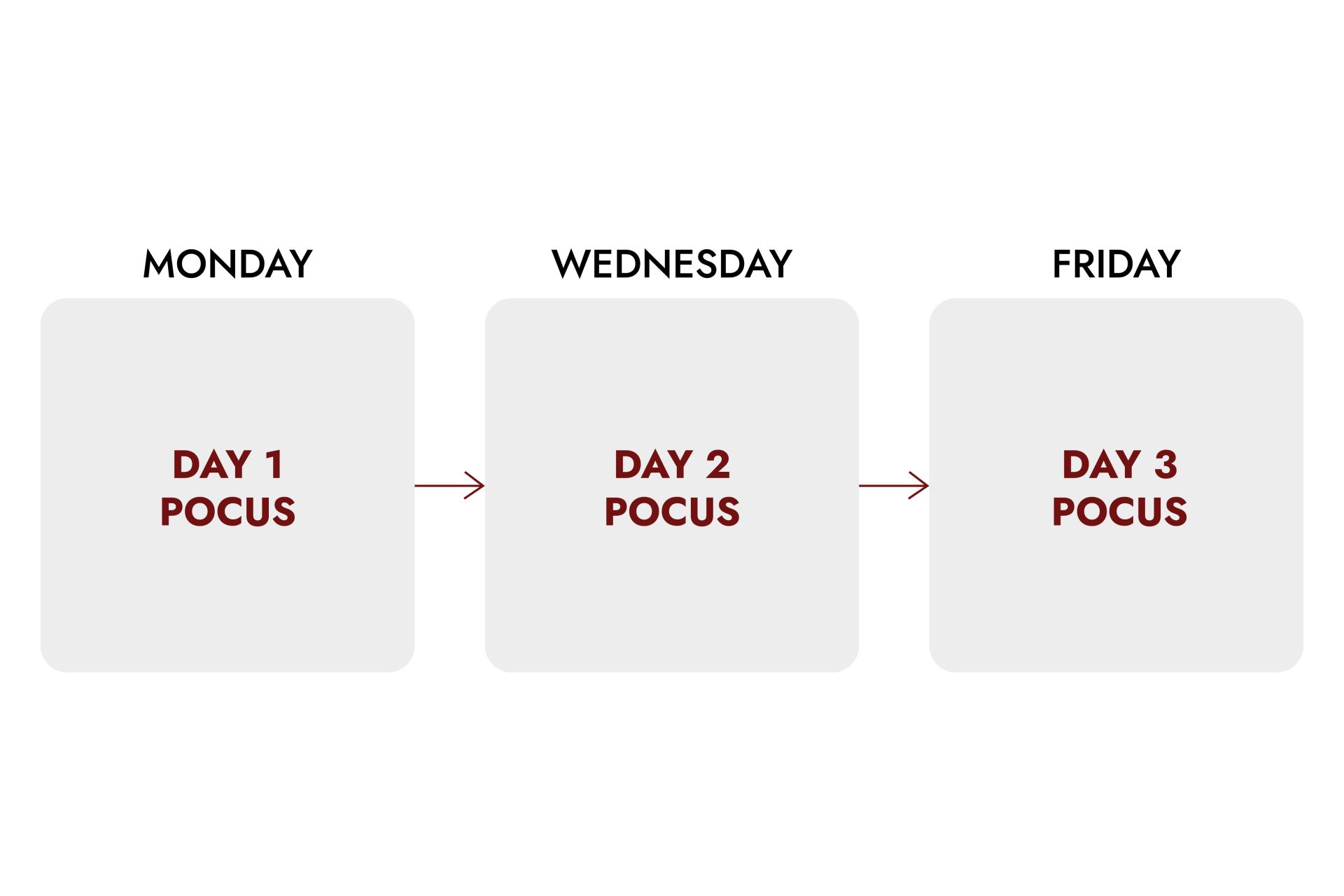
Day 1 (Monday or Tuesday): Scan all three views on a patient. Notice what's easy, what's hard.
Day 3 (Wednesday or Thursday): Scan the same three views again. Don't review notes first. Just scan. See what you remember.
Day 5 (Friday or weekend): Scan them one more time. Notice what's become automatic.
That's it.
Three views. Three days. Spaced across a week.
Why This Works
1. Spacing creates retrieval demand
When you wait a day or two between practice sessions, your brain has to work harder to recall the information. That effort is what strengthens memory.
2. Repetition with spacing is shallow
Scanning the same view five times in one shift feels productive — but it's just short-term memory rehearsal.
Your brain hasn't had to retrieve anything. Come next week, it's gone.
3. Confidence builds on predictability
When you see the same three views across multiple patients, patterns start to emerge. You notice what changes and what stays consistent. That's when interpretation becomes intuitive.
The Science Behind Spaced Practice
This approach isn't new — it's grounded in over a century of learning research.
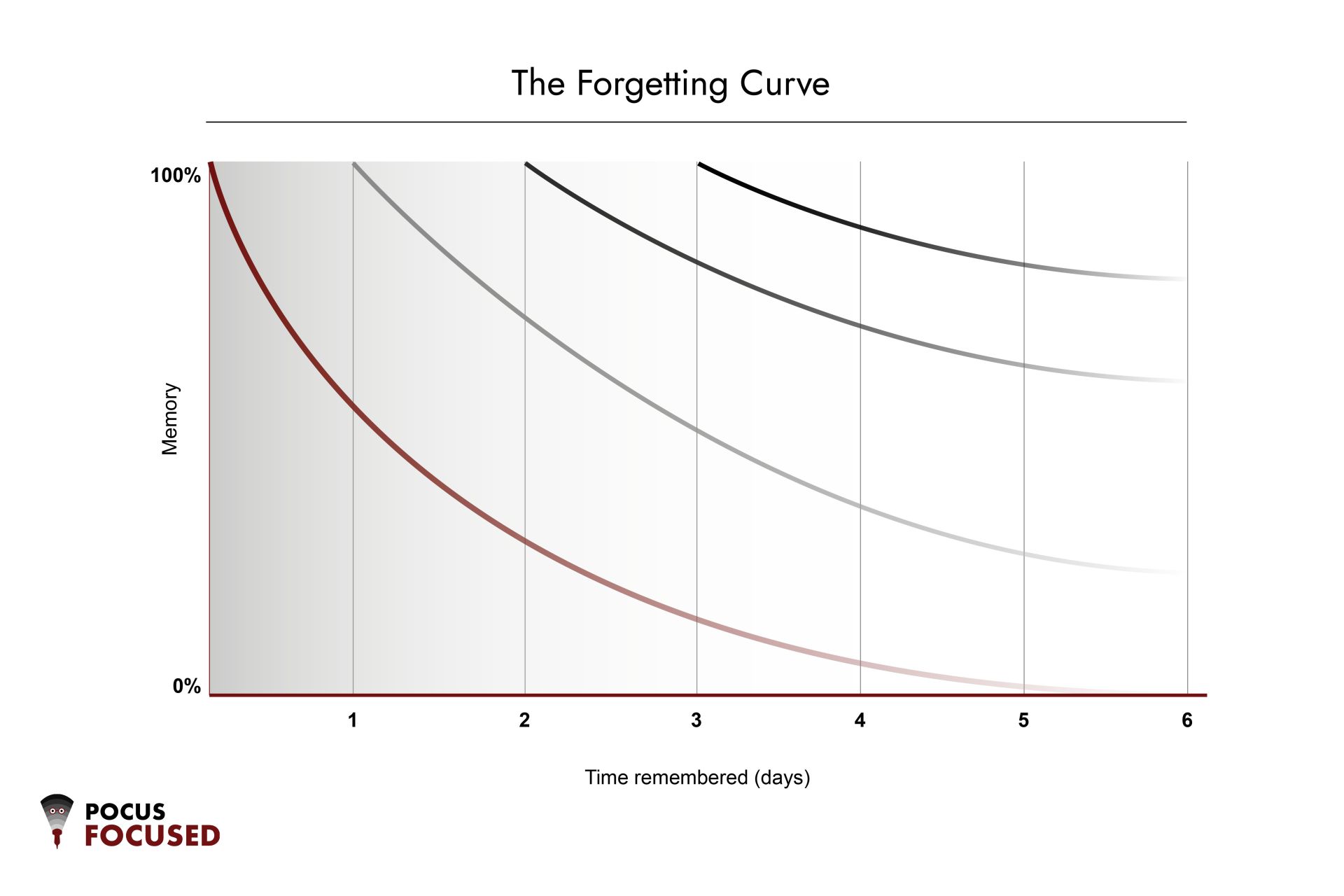
Ebbinghaus discovered the "forgetting curve" — the rapid drop-off in memory within hours of learning something new.
But he also found that spacing practice sessions across days dramatically flattens that curve.
Modern research has confirmed this again and again: distributed practice beats massed practice for long-term retention.
This is also why our POCUS Focused courses are structured the way they are.
We don't dump all the content at once and hope you remember it.
We space lessons strategically — revisiting key concepts at intervals designed to maximize retention.
Video libraries give you access.
We're giving you a learning architecture.
What to Do This Week
Choose your anchor exam (cardiac, lung, abdominal aorta — whatever fits your clinical setting best).
Pick three core views from that exam.
Scan those three views on Day 1, Day 3, and Day 5.
Don't overcomplicate it. Don't add more views. Just these three.
By the end of the week, you'll notice something shift.
The probe placement will feel more automatic. The anatomy will resolve faster.
Interpretation will feel less effortful.
That's not luck.
That's spaced repetition doing exactly what the science says it does.
Looking Ahead
The February plateau isn't about working harder.
It's about working smarter — with your brain's natural learning patterns, not against them.
Three views. Three days. One week at a time.
Before you sign off …
If you’re ready to stop fighting your brain and start learning the way cognitive science shows actually works, our courses are built around these exact principles.
Spaced repetition. Retrieval practice. Clinical context.
🎉 Now live: POCUS in Focus 🎉
We built POCUS in Focus for clinicians who want to stay sharp with ultrasound but don’t have time for another course.
Each week, you’ll work through one real ultrasound case in about 15 minutes, with a few questions and a short discussion focused on clinical judgment and decision-making.
We’re currently offering a limited $99 founder’s rate. Once seats fill, pricing moves to $149.
If you want a realistic, low-friction way to keep building POCUS skills, you can learn more here:
Until next week,
Dr. Bob Jones
DrBob@pocusfocused.com

Company
Learning
Connect
-
PO Box 23038Chagrin Falls, OH 44023
-
support@pocusfocused.com