
The Year You Finally Stop Dabbling
The Hidden Cost of Dabbling
Dabbling feels productive.
You scan a little here, a little there. You recognize anatomy. You follow along when others scan.
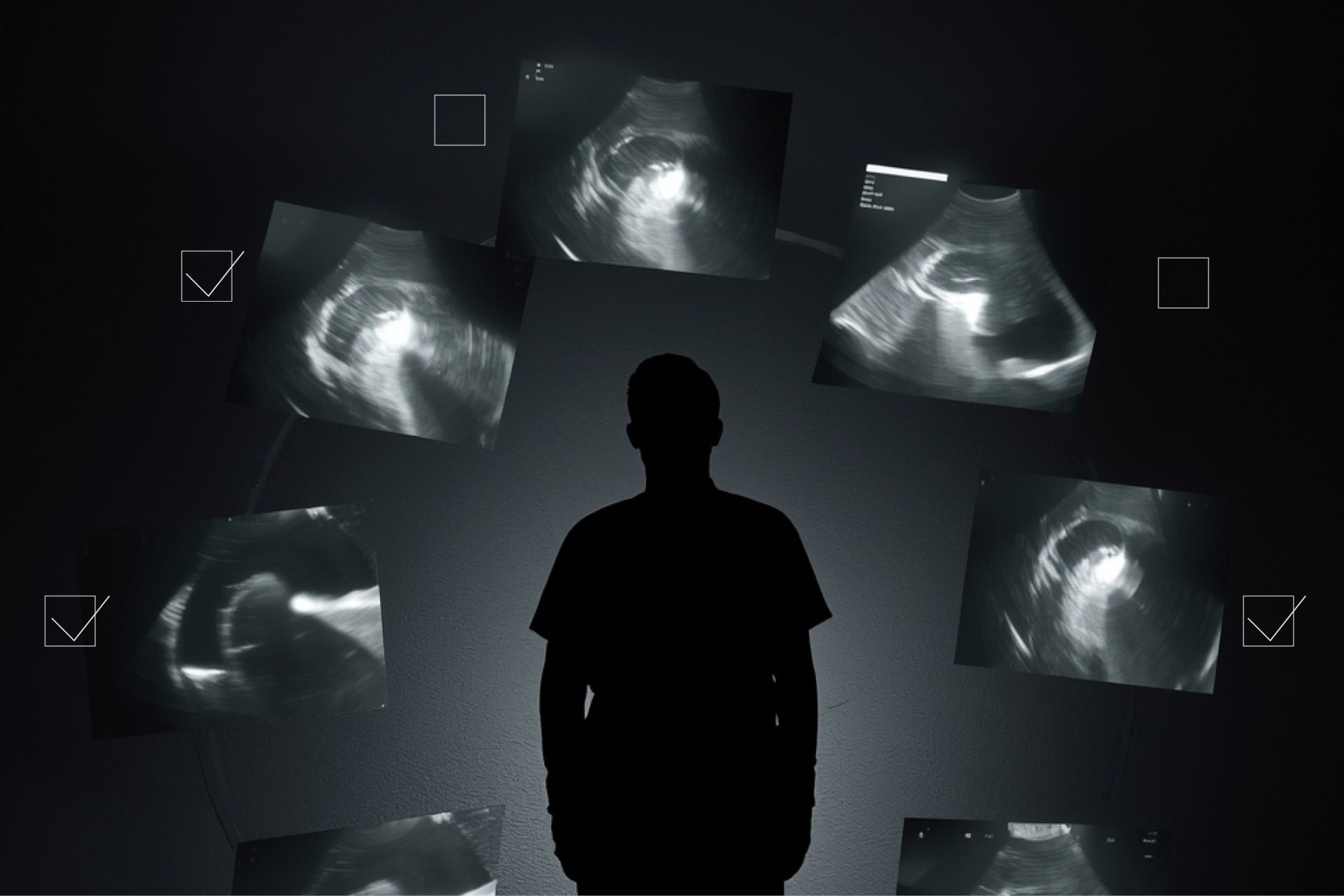
But dabbling has a ceiling.
Because without repetition in the same clinical lane, your brain never fully relaxes into pattern recognition.
Everything stays effortful.
What Mastery Actually Looks Like
Mastery in POCUS doesn’t come from scanning everything all the time —but it also doesn’t require shutting down curiosity.
It comes from purposeful repetition inside a wider clinical lens.
That means:
● Revisiting the same anatomy often enough to see normal → abnormal →borderline
● Noticing how image quality, body habitus, and positioning change what you can (and can’t) conclude
● Becoming aware of where you hesitate — and when that hesitation actually matters clinically
By all means, explore new POCUS exams.
But real confidence develops when one exam becomes your anchor —the place where your speed, accuracy, and judgment noticeably sharpen.
That’s how dabbling turns into discernment — and how range grows without sacrificing depth.

A Simple Commitment for Now
If you need this to be the year your POCUS skills noticeably level up, try this:
● Choose one exam to make an anchor point.
● Commit to it for a few weeks — not because it’s the only thing you’re allowed to scan, but because it’s the exam you’re intentionally sharpening.
Keep exploring other exams as they arise.
When your anchor exam fits clinically, reach for it first and execute it with intention.
Over a few weeks, you’ll notice a shift …. less setup friction, faster interpretation, and clearer clinical decisions.
That’s not limitation.
That’s how range starts to compound into excellence.
Here’s an idea – let me be your accountability partner on this.
● Email me (I personally answer all my mail) DrBob@POCUSFocused.com
● Tell me what your anchor scan is going to be. Where you currently struggle and what your plan to optimize this over the next few weeks looks like.
Why This Works
Repetition builds trust.
You stop second-guessing probe placement and image quality.
Cognitive load drops.
Your attention shifts from ‘Am I doing this right?’ to ‘What does this mean for my patient?’
Confidence becomes transferable.
Once you master one exam, learning the next one accelerates.
Looking Ahead
Progress in POCUS doesn’t require intensity.
It requires direction.
One anchor exam.
One season of focus.
Depth that compounds.
Before you sign off …
If you’re ready to move beyond dabbling, we’ve built focused courses designed around clinical mastery — not content overload.
You can explore them on our website.
Lastly, most of us are more time-compressed than ever. Long study sessions aren’t realistic, but completely stepping away from POCUS doesn’t work either.
I’m exploring a simple weekly POCUS case of the week — one case, one question, just enough to keep pattern recognition active without adding burden.
If that would be useful to you, you can register here to receive updates:
Until next week,
Dr. Bob Jones
DrBob@pocusfocused.com
Progress in POCUS doesn’t require intensity.
It requires direction.
One anchor exam.
One season of focus.
Depth that compounds.

Company
Learning
Connect
-
PO Box 23038Chagrin Falls, OH 44023
-
support@pocusfocused.com