The February Plateau (And How To Overcome It!)
Why Every Clinician Hits a February Dip (and How to Climb Out)
The February Effect
January is easy… New year energy carries you forward. You commit to systems. You make plans.
But February?
February is when reality sets in.
The shifts are long. The flu season chaos drags on. That “anchor exam” you chose? You haven’t scanned it as often as you hoped.

And here’s the uncomfortable part most clinicians don’t talk about:
Your POCUS skills aren’t improving as fast as you expected.
This Isn’t a Motivation Problem
If you’re feeling stuck right now, it’s not because you lack discipline.
It’s because skill development doesn’t move in straight lines.
Plateaus are built into the learning process.
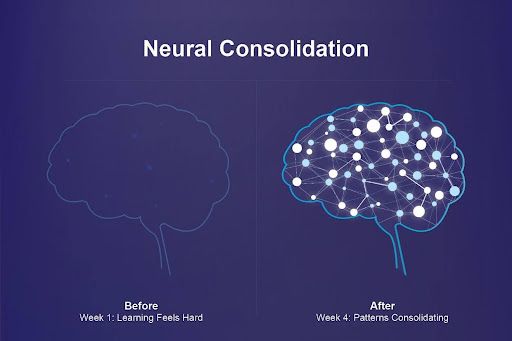
Your brain is doing invisible work — consolidating patterns, refining motor memory, building the neural pathways that will eventually make scanning feel automatic.
But from your perspective, it just feels like little to no progress.
You’re scanning. You’re trying. But confidence isn’t building the way you thought it would.
The Hidden Friction Point
Here’s what’s actually happening:
You’re caught between technical competence and clinical confidence.
- You can find anatomy (most of the time).
- You recognize when an image looks “off.”
- You understand the protocol steps.
But when it matters — when you’re making a real clinical decision at 2 a.m. — you still hesitate.
That hesitation isn’t incompetence.
It’s the friction of transition — the space between knowing what to do and trusting what you see.

How to Break Through
The solution isn’t more scans. It’s more deliberate scans.
Here’s what I mean:
1. Narrow your window even further
If you committed to one anchor exam type in January, go narrower.
Get specific about the clinical scenario where that exam matters most.
- Not just “cardiac” — dyspnea in the ED
- Not just “lung” — ruling out pneumothorax post-procedure
Specificity removes friction.
When you know exactly what clinical question you’re answering, interpretation becomes clearer.
2. Stop chasing perfect images
February is when clinicians get paralyzed by image quality.
You spend five minutes repositioning the probe, trying to get textbook views… and by the time you’re done, the moment has passed.
Here’s permission to let go of perfection:
Good enough images that answer the clinical question are better than perfect images that don’t.
Your goal isn’t publication-ready scans. It’s confident decision-making.
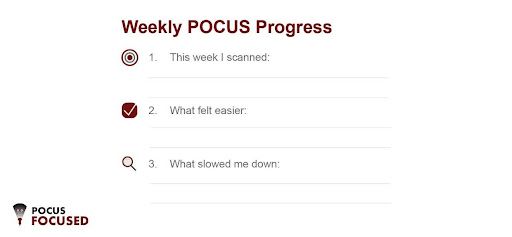
3. Track one small win per week
You don’t need elaborate logs.
Just one sentence:
“This week, [specific exam] felt easier because [one concrete reason].”
Examples:
- “Cardiac windows felt easier because I finally adjusted my hand position.”
- “Lung scans felt faster because I stopped second-guessing A-lines.”
- “IVC measurement felt more confident because I committed to one consistent landmark.”
Small wins compound.
Why This Actually Works
Narrowing focus reduces cognitive load.
Your brain stops juggling 10 things and starts refining one thing deeply.
Accepting “good enough” builds momentum.
Perfectionism is the enemy of progress. Speed at the bedside matters more than flawless technique.
Tracking wins rewires your perception.
When you name what’s improving, your brain starts looking for more improvements. Progress becomes visible.
The Science Behind the Plateau
This isn’t motivational talk — it’s neuroscience.
When you practice the same exam repeatedly, your brain is building what researchers call “retrieval pathways.”
Peter Brown and his colleagues studied this extensively in Make It Stick. They found that the feeling of difficulty during learning is actually a sign that your brain is strengthening long-term memory.
That February friction you’re feeling? It’s not failure. It’s consolidation.
The scans that feel harder right now will feel automatic in March — but only if you keep showing up during the difficult middle.
This is also why our POCUS Focused courses are structured the way they are — with spaced repetition and built-in retrieval practice.
We’re not guessing at how to teach. We’re using what cognitive science shows actually works.
Video libraries give you content.
We’re giving you a learning architecture designed around how your brain builds lasting competence.
What to Do This Week
If you’re in the February dip right now:
1. Identify your highest-yield clinical scenario for your anchor exam
2. Commit to “good enough” images that answer the question
3. Write down one win by Friday
That’s it.
Don’t overcomplicate this.
Progress doesn’t require intensity — it requires direction.
Looking Ahead
February is the month that separates people who dabble from people who build lasting skills.
The dip is normal.
The friction is temporary.
The plateau ends when you keep showing up — not with more effort, but with better focus.
Before you sign off …
If you’re ready to move beyond the plateau, our courses are built around this exact process: focused repetition, clinical context, and deliberate practice designed how your brain actually learns.
We’re not selling you a video library. We’re giving you a structured path from competence to confidence.
Lastly, most of us are more time-compressed than ever. Long study sessions aren’t realistic, but completely stepping away from POCUS doesn’t work either.
I’m exploring a simple weekly POCUS case of the week — one case, one question, just enough to keep pattern recognition active without adding burden.
If that would be useful to you, you can register here to receive updates:
Until next week,
Dr. Bob Jones
DrBob@pocusfocused.com
P.S. — Stuck on a specific exam? Send me an email and tell me what’s slowing you down. I personally read every email, and sometimes the simplest question leads to the biggest breakthrough.

Company
Learning
Connect
-
PO Box 23038Chagrin Falls, OH 44023
-
support@pocusfocused.com