
During my emergency medicine residency in the late 1980s, the emergency department was both a battleground and a classroom. It sat at the edge of one of the nation’s busiest trauma corridors, where the ambulance bay doors never closed, and the cases appeared to never stop.
The environment was raw — violent crime, drug epidemics, and desperation poured through those doors nightly. Trauma recidivism in the city hovered near 40–45%, and mortality for major injuries approached one in five. The sheer ED volume made this program both gritty and coveted — the place young physicians went to learn fast, work hard, and see everything.
The soundtrack of those nights was relentless: monitors beeping, trauma pages blaring overhead, gurneys clattering down the hall, someone shouting, “Room three’s crashing.”
It was the kind of environment that forged judgment under pressure and demanded speed, accuracy, and endurance in equal measure.
This particular Friday night was busy early — the kind where you hit the ground running and don’t stop until sunrise.
As the senior resident, I was running the department, which meant the attending should have an easy shift if I was doing my job right.
The student becomes the teacher.
So when I was advised we had a rotating trauma fellow from Germany starting that night, I just nodded. Inside, though, I felt that small sag every senior knows — a full board, the city’s usual chaos, and now the responsibility of breaking in someone new.
Not ideal, but you square your shoulders and move on. Lives to save and all that.
Early in the shift, a patient arrived, critical with failing vitals, after a high-speed motor vehicle crash.
He was hypotensive and unresponsive to fluids — the classic setup for a diagnostic peritoneal lavage (DPL).
The ED attending quickly signaled agreement. As I called for the procedure tray from the nursing staff, the fellow spoke up.
“I have a quicker idea,” he said. “Give me thirty seconds.”
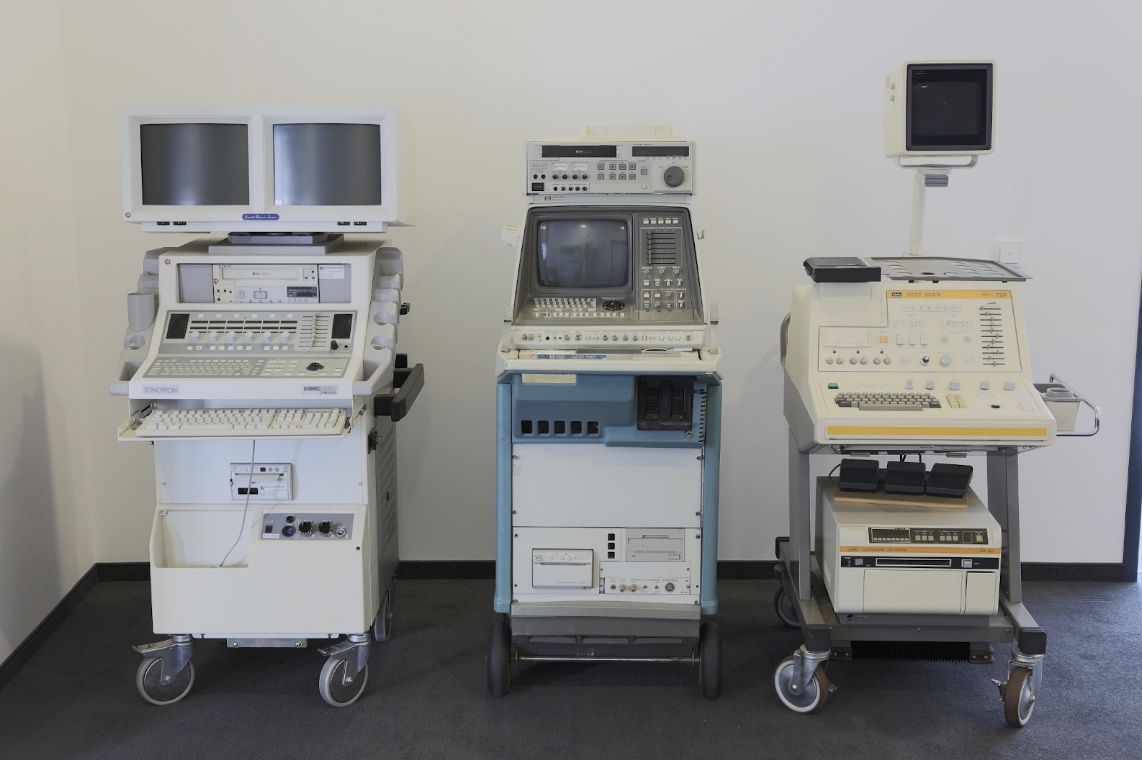
He stepped just outside the trauma bay and immediately rolled back in a ‘portable’ ultrasound machine — which in those days meant a refrigerator-sized unit on wheels that groaned when you moved it.
The soundtrack of those nights was relentless: monitors beeping, trauma pages blaring overhead, gurneys clattering down the hall, someone shouting, “Room three’s crashing.”
It was the kind of environment that forged judgment under pressure and demanded speed, accuracy, and endurance in equal measure.
This particular Friday night was busy early — the kind where you hit the ground running and don’t stop until sunrise.
As the senior resident, I was running the department, which meant the attending should have an easy shift if I was doing my job right.
The student becomes the teacher.
So when I was advised we had a rotating trauma fellow from Germany starting that night, I just nodded. Inside, though, I felt that small sag every senior knows — a full board, the city’s usual chaos, and now the responsibility of breaking in someone new.
Not ideal, but you square your shoulders and move on. Lives to save and all that.
Early in the shift, a patient arrived, critical with failing vitals, after a high-speed motor vehicle crash.
He was hypotensive and unresponsive to fluids — the classic setup for a diagnostic peritoneal lavage (DPL).
The ED attending quickly signaled agreement. As I called for the procedure tray from the nursing staff, the fellow spoke up.
“I have a quicker idea,” he said. “Give me thirty seconds.”
He stepped just outside the trauma bay and immediately rolled back in a ‘portable’ ultrasound machine — which in those days meant a refrigerator-sized unit on wheels that groaned when you moved it.
Dr. Robert Jones, DO, FACEP — a nationally-recognized educator and front-line emergency physician — has dedicated his career to advancing POCUS from “novel tool” to standard practice. From launching ultrasound fellowships to authoring curricula and training thousands of clinicians worldwide, he blends over 30 years of high-volume trauma experience with proven teaching skill to shape the next generation of point-of-care innovators.

Copyright © 2025