
Building POCUS Confidence
________________________________________________________________
December's theme has been all about building your POCUS Confidence — moving from “I dabble” to “I depend on it.”
________________________________________________________________
A Quick Look Back
Last week, we focused on the real barriers that quietly hold clinicians back from using POCUS with confidence: time, uneven training, inconsistent practice, limited feedback, and lack of a clear routine.
The takeaway was simple but powerful — confidence grows when practice is structured, small, and repeatable, not when it’s heroic or perfect.
That naturally leads to the next question: structured toward what?
What does progress actually look like at the bedside?
What “Clinically Sound” Looks Like in POCUS
Most clinicians using point-of-care ultrasound aren’t chasing perfection. We are asking a quieter, more responsible question:
When is a POCUS scan clinically sound enough to trust at the bedside?
Not a flawless image. Not an exhaustive study. Just … Clinically sound.
This question sits at the intersection of patient safety, professional judgment, and real-world medicine. Yet it’s rarely answered explicitly in training, leaving clinicians to infer standards that are either unrealistically high or dangerously vague.
The Myth That Gets in the Way
Many of us internalize an unspoken message: POCUS should only be used by experts.
I don’t believe that this mindset results in better care – instead, it leads to under-use of a powerful diagnostic tool and stalled skill development.
Clinical excellence does not come from waiting until uncertainty disappears. It comes from learning how to make sound decisions in the presence of uncertainty.
A Working Definition of Clinically Sound POCUS
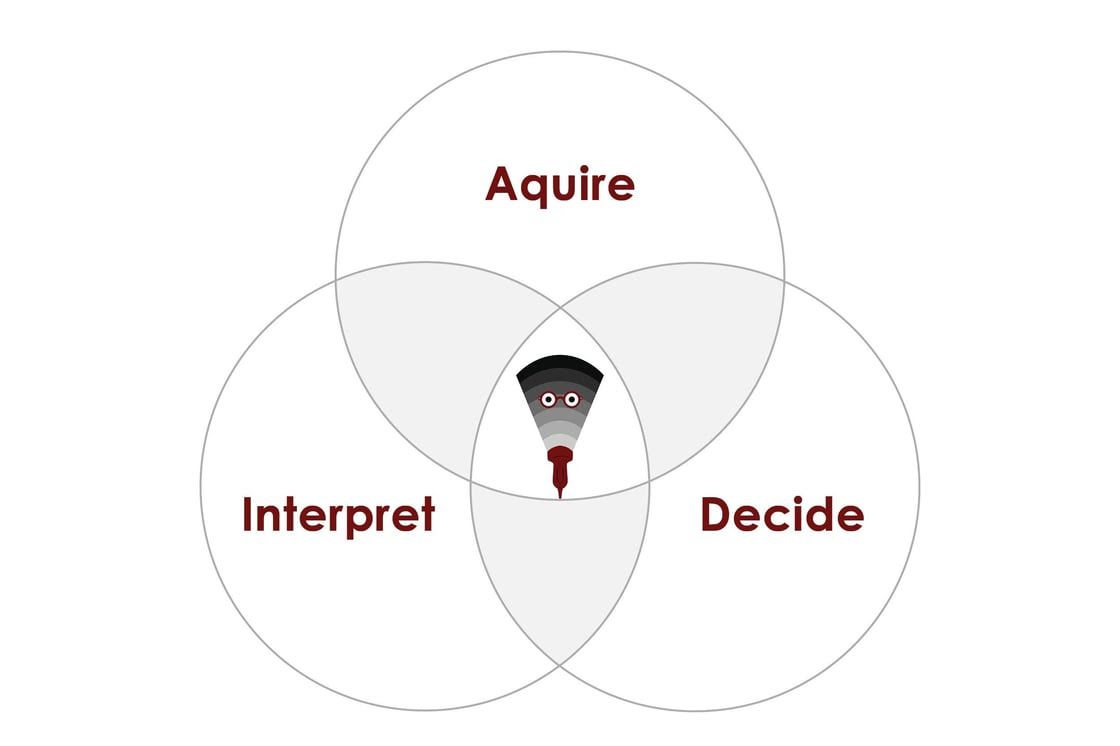
A POCUS exam is clinically sound when three conditions are met:
1. Image acquisition: The image is technically adequate and interpretable.
2. Interpretation: You can reliably distinguish normal from clearly abnormal findings.
3. Clinical relevance: The scan meaningfully informs the clinical question or next step.
A Simple Self-Check for Clinical Soundness
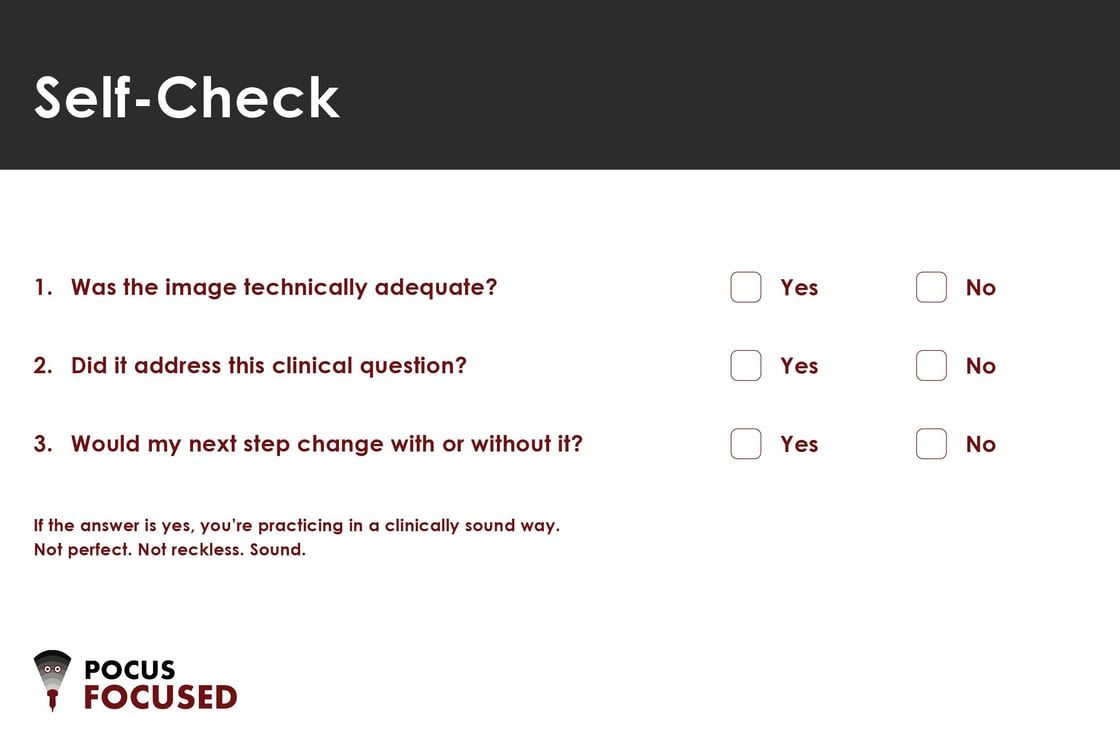
When performing scans, ask yourself:
• What is my clinical question?
• Did it address this clinical question?
• Was the image technically adequate?
• Would my next step change with or without it?
If the answer is yes, you’re practicing in a clinically sound way. Not perfect. Not reckless.Sound.
Here's a downloadable infographic you can keep on hand:
The Bigger Picture
Clinical excellence is built through repeated, thoughtful decisions made within clear boundaries. Clinically sound POCUS use is not the end goal — it’s the foundation that makes expertise inevitable.
Where We’ve Been — and What’s Next
So far this month, we’ve established three core truths:
1. You’re not behind — the system hasn’t made consistent POCUS practice easy.
2. The real barriers are operational, not personal — and they’re fixable.
3. Confidence grows fastest when expectations are clear and achievable. That means remaining focused. What is the clinical question I am trying to answer?
Next week, we’ll zoom out and look ahead. POCUS is no longer niche — it’s mainstream.
We’ve just gotten started — and 2026 is where this really takes shape!
________________________________________________________________
My personal thanks to you for being part of the POCUS Focused community.
I’d genuinely love to hear from you. Hit reply and let me know what’s been most helpful—or where you still feel uncertain. I read and respond to every message.
For clinicians who want more structured support, our Emergency Medicine and Hospitalist flagship courses are available now. Each is designed to help you move from occasional scanning to clinically sound, everyday use—without adding more noise to your schedule.
You can explore our full course catalog here:
Until next week,
Bob

Company
Learning
Connect
-
PO Box 23038Chagrin Falls, OH 44023
-
support@pocusfocused.com